
Services
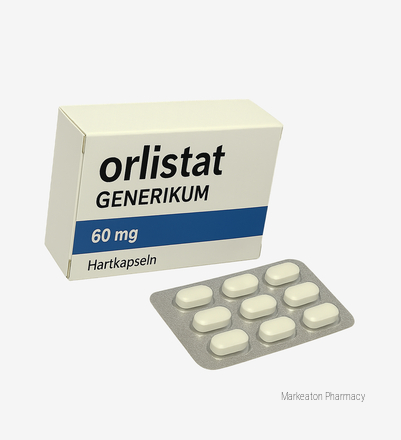
- Is orlistat available without prescription in the UK?
- What does Pharmacy medicine mean in the UK?
- General information about orlistat
- How orlistat affects fat absorption
- Price and availability information
- Strengths, formulations and pack types
- Orlistat for weight loss and obesity
- UK legal classification: GSL, P and POM
- Alternatives for weight management
- Orlistat compared with other weight loss medicines
- Food, diet and lifestyle considerations
- Side effects and tolerability
- Long-term use and excessive exposure
- Warnings, contraindications and interactions
- Additional information about orlistat
Is orlistat available without prescription in the UK?
Yes, orlistat is available without prescription in the United Kingdom but only in a 60 mg dose marketed under the brand name Alli and certain authorised generic equivalents. This Pharmacy (P) medicine can be sold in community pharmacies under professional supervision. The higher 120 mg dose of orlistat is classified as a Prescription Only Medicine (POM) and must be supplied with a valid GP or hospital prescription.
The non-prescription orlistat product is intended for adults with a body mass index (BMI) of 28 kg/m² or more. Supply without prescription is limited to short-term or intermittent use aligned with the approved indication. Any patient seeking long-term or higher-dose therapy should obtain a prescription from a qualified healthcare professional. Markeaton Pharmacy can advise on the correct dose and determine whether a supervised purchase of orlistat 60 mg is appropriate for your individual needs.
Being able to purchase orlistat online or in store without a prescription makes it a convenient weight loss aid for eligible adults, but it should not be used by pregnant or breastfeeding women or by anyone under 18 years of age. Always consult a pharmacist if you are unsure whether orlistat is suitable for you, especially if you are taking other medicines or have underlying medical conditions.
What does Pharmacy medicine mean in the UK?
In the UK, human medicines fall into three legal categories based on their safety profile, the need for professional oversight and the risk of misuse: Prescription Only Medicine (POM), Pharmacy medicine (P) and General Sales List medicine (GSL). A Pharmacy medicine (P) can be supplied without a prescription but only under the supervision of a pharmacist or trained pharmacy staff. This classification ensures that the patient receives appropriate advice and counselling on correct use, potential side effects and any warnings.
Orlistat 60 mg is a Pharmacy medicine. This means you can purchase orlistat 60 mg tablets online from reputable pharmacies like Markeaton Pharmacy after a brief consultation with a pharmacist. The pharmacist will verify that you meet the criteria for safe self-care, screen for contraindications and provide guidance on dosage, dietary measures and possible interactions. Pharmacists also record the sale to ensure safe repeat supply if needed.
Understanding these categories is crucial. “Over the counter” (OTC) is often used loosely to mean any medicine sold without a prescription, but not all OTC medicines can be sold in supermarkets or petrol stations. A Pharmacy medicine requires a sale through or in consultation with a pharmacy, helping to maintain a higher standard of patient safety than General Sales List products.
General information about orlistat
What is orlistat?
Orlistat is a lipase inhibitor used as an adjunct to a reduced-calorie diet for the management of obesity in adults. It works by reducing the amount of dietary fat absorbed by the body, thus creating a caloric deficit that can support weight loss. Orlistat is available in 60 mg (OTC) and 120 mg (prescription) doses.
Why is orlistat classed as a lipase inhibitor?
Lipase is an enzyme produced by the pancreas and stomach that breaks down dietary fats into absorbable fatty acids and glycerol. By inhibiting lipase, orlistat prevents approximately 25–30% of ingested fat from being hydrolysed and absorbed, passing instead through the gastrointestinal tract unabsorbed.
Is orlistat a stimulant?
No. Unlike some weight loss medications that act on the central nervous system to suppress appetite, orlistat acts locally in the gut. It does not cross into the bloodstream in significant amounts, minimizing systemic side effects related to the central nervous system.
Is orlistat an appetite suppressant?
No. Orlistat does not reduce hunger or cravings. To achieve effective weight loss, it must be combined with a reduced-calorie diet and increased physical activity, as part of a comprehensive weight management programme under professional supervision.
Is orlistat an antacid?
No. Orlistat has no direct impact on gastric pH or acid production. It is not indicated for heartburn or reflux symptoms and does not possess antacid properties.
How orlistat affects fat absorption
What is the mechanism of action?
Orlistat works by forming a covalent bond with the active serine site of gastric and pancreatic lipases in the lumen of the stomach and small intestine. This bond is stable at physiological pH, rendering those enzyme molecules inactive. As a result, the breakdown of triglycerides into absorbable free fatty acids and monoglycerides is inhibited.
What happens to unabsorbed fat?
The undigested triglycerides remain in the gastrointestinal tract and are excreted in the faeces. This reduction in fat absorption typically amounts to about 30% of dietary fat intake, although the exact percentage can vary depending on individual factors and diet composition.
Does orlistat work on other macronutrients?
No. Orlistat specifically inhibits pancreatic and gastric lipases and does not affect the digestion or absorption of proteins, carbohydrates, vitamins or minerals. Patients should follow a well-balanced diet, taking particular care to include essential vitamins such as A, D, E and K, which are fat-soluble.
Why take orlistat with meals?
To be effective, orlistat must be present in the intestinal lumen when dietary fat arrives. It should therefore be taken during or up to one hour after each main meal that contains fat. If a meal is missed or contains no fat, orlistat can be skipped without taking an additional dose.
Price and availability information
How much does OTC orlistat cost in the UK?
Prices for orlistat 60 mg can vary depending on the retailer, pack size and whether the product is branded (Alli) or a licensed generic. As of September 2026, typical UK prices range from £25 to £35 for a pack of 84 capsules. Larger packs or repeated purchase schemes may offer slightly cheaper per-unit pricing.
Why do prices vary between retailers?
Price differences reflect factors such as distribution costs, promotional offers, pack sizes and whether the retailer is an online-only pharmacy or a high-street chain. Generic orlistat products may be cheaper than the branded Alli version, but they contain the same active ingredient and must meet identical quality standards.
| Product | Strength | Pack size | Approximate price | Type |
|---|---|---|---|---|
| Alli | 60 mg | 84 capsules | £35.00 | Branded OTC |
| Generic Orlistat | 60 mg | 84 capsules | £25.00 | Licensed generic |
| Orlistat 120 mg | 120 mg | 42 capsules | Prescription pricing | POM |
For the most current availability and cheapest price—buy orlistat online from Markeaton Pharmacy to take advantage of professional advice, fast UK shipping and bulk-purchase discounts on generic capsules.
Strengths, formulations and pack types
What strengths are available?
Orlistat is available in two strengths in the UK:
- 60 mg capsules for non-prescription use (OTC Pharmacy medicine, Alli and licensed generics).
- 120 mg capsules for prescription-only use (POM), typically prescribed for adults with BMI ≥30 kg/m², or ≥28 kg/m² with comorbidities.
Why are there different pack sizes?
Pack size influences supply classification and authorised course duration. A typical OTC pack of orlistat 60 mg contains 84 capsules, enough for 28 days at three capsules per day. Prescription packs of 120 mg may contain 28 or 56 capsules depending on prescription instructions.
Are tablets or capsules available?
Orlistat is formulated exclusively as hard capsules. They contain the active lipase inhibitor as a powder formulation designed to release the drug in the stomach and small intestine.
Why choose generic over branded?
Generic products contain the same active ingredient and must demonstrate bioequivalence to the branded reference. Differences may exist in capsule colour, excipients or packaging, but the clinical effect and safety profile are identical when authorised by the MHRA.
Orlistat for weight loss and obesity
Who is orlistat indicated for?
OTC orlistat 60 mg is for adults with a BMI ≥28 kg/m² seeking self-care support for weight reduction. Prescription orlistat 120 mg is indicated for adults with BMI ≥30 kg/m², or ≥28 kg/m² if additional risk factors like hypertension, dyslipidaemia or type 2 diabetes are present.
How should orlistat be used in a diet plan?
Orlistat must be combined with a nutritionally balanced, reduced-calorie diet where approximately 30% of energy comes from fat. Patients should distribute fat intake evenly across three main meals to reduce gastrointestinal side effects.
What weight loss can be expected?
Clinical trials show an additional 3–5% weight loss over diet alone at one year with orlistat therapy. Individual results vary based on adherence to diet, frequency of dosing and physical activity levels.
Can orlistat help maintain weight loss?
Yes. Long-term use of orlistat in conjunction with lifestyle modification has been shown to improve weight maintenance and reduce the risk of weight regain after initial loss.
UK legal classification: GSL, P and POM
What is a POM?
A Prescription Only Medicine can be supplied only against a valid prescription from a qualified prescriber. Orlistat 120 mg falls under this classification.
What is a Pharmacy medicine?
A Pharmacy medicine can be supplied without prescription but only under the supervision of a pharmacist. Orlistat 60 mg is a Pharmacy medicine, ensuring professional oversight at the point of sale.
What is a GSL medicine?
A General Sales List medicine can be sold in any retail outlet without the supervision of a pharmacist. Orlistat is not a GSL medicine; it requires pharmacy supervision or prescription.
Why does orlistat have different categories?
The classification reflects differences in dose, intended indication and safety considerations. Higher-strength prescription doses pose greater risk of malabsorption of fat-soluble vitamins and drug interactions, so require medical supervision.
Who regulates these categories?
The UK Medicines and Healthcare products Regulatory Agency (MHRA) sets legal classifications and authorises reclassifications based on safety, efficacy and public health considerations.
Alternatives for weight management
What other medications exist?
- Orlistat 120 mg (Xenical) by prescription;
- Lorcaserin (not currently authorised in the UK);
- Phentermine (POM, limited availability);
- GLP-1 receptor agonists such as semaglutide (POM);
- Prescription combination therapies where approved.
Non-pharmacological approaches
A comprehensive weight management plan may include dietary modification, behavioural therapy, exercise programmes, meal replacements and structured support groups. Medication should complement, not replace, healthy lifestyle changes.
Why choose orlistat over others?
Orlistat’s local gut-based action avoids central nervous system effects and dependence potential. Its OTC availability provides convenient access for appropriately screened adults, although prescription alternatives may produce greater weight loss under close medical supervision.
Orlistat compared with other weight loss medicines
How does orlistat compare with liraglutide?
Liraglutide is a GLP-1 receptor agonist requiring daily subcutaneous injection and medical supervision, often resulting in greater weight loss but with systemic effects like nausea. Orlistat is oral and acts locally with a different side effect profile.
How does orlistat compare with phentermine?
Phentermine is an appetite suppressant with stimulant properties and potential for dependency, classified as a POM. Orlistat lacks central stimulant effects and has negligible abuse potential.
| Feature | Orlistat | GLP-1 agonists | Phentermine |
| Administration | Oral capsule | Subcutaneous injection | Oral tablet |
| Main mechanism | Lipase inhibition | Appetite regulation, satiety | Appetite suppression |
| OTC availability | Yes (60 mg) | No | No |
| Common side effects | GI effects | Nausea, vomiting | Insomnia, tachycardia |
Is one medication always better?
No. Choice depends on BMI, comorbidities, patient preference, cost, route of administration and tolerance of side effects. Pharmacist or medical advice can guide the best option for each individual.
Food, diet and lifestyle considerations
Why is a low-fat diet important?
To minimize gastrointestinal side effects such as oily stools and flatulence, patients should distribute fat intake evenly over three main meals and limit total daily fat to around 30% of total calories.
Can alcohol affect results?
Alcohol is calorie-dense and may contribute to weight gain. Some drinks also contain fat and sugar, potentially increasing GI side effects when combined with orlistat.
Is exercise necessary?
Yes. Regular physical activity enhances weight loss, preserves lean muscle mass and improves metabolic health. A combination of aerobic exercise and strength training is recommended.
What about vitamin supplements?
Because orlistat reduces absorption of fat-soluble vitamins A, D, E and K, a multivitamin supplement is recommended, taken at least 2 hours before or after orlistat to ensure adequate nutrient intake.
Side effects and tolerability
Can orlistat cause side effects?
Yes. The most frequent side effects are gastrointestinal and related to fat malabsorption. They include:
- Oily spotting or stools;
- Increased number of bowel movements;
- Urgent bowel movements;
- Flatulence with discharge;
- Abdominal cramps.
These effects tend to occur early in treatment and may decrease over time with adherence to a low-fat diet. Systemic side effects are rare due to minimal systemic absorption.
Can serious adverse reactions occur?
Rarely, severe hepatic injury has been reported in postmarketing surveillance, although a direct causal link is not firmly established. Patients with known chronic malabsorption syndromes should avoid orlistat.
Why follow dietary advice strictly?
Reducing dietary fat decreases the incidence and severity of gastrointestinal side effects, improving tolerability and adherence to therapy.
Long-term use and excessive exposure
How long can orlistat be used?
Orlistat can be used long-term under medical supervision for weight maintenance if initial weight loss goals are achieved. Continuous assessment by a healthcare professional is advised to monitor nutritional status and weight trends.
Is there a risk of nutrient deficiencies?
Long-term fat malabsorption may lead to deficiencies of fat-soluble vitamins and β-carotene. Regular monitoring and supplementation help mitigate this risk.
Can orlistat be stopped abruptly?
Yes. Orlistat therapy can be discontinued at any time. However, patients should be aware that sudden cessation may reduce weight maintenance benefits and that dietary and lifestyle habits remain important.
Warnings, contraindications and interactions
Who should avoid orlistat?
- People with chronic malabsorption syndromes (e.g., cholestasis);
- People with cholestatic liver disease;
- Pregnant or breastfeeding women;
- People with known hypersensitivity to any ingredient;
- Children under 18 years of age;
- People taking cyclosporin without medical supervision.
Can orlistat interact with other medications?
Yes. Orlistat can reduce absorption of ciclosporin, amiodarone and certain antiretroviral drugs. It may alter the bioavailability of fat-soluble vitamins and levothyroxine if taken concurrently. Always inform your pharmacist of all medications you take.
Why monitor fat-soluble vitamin levels?
Because orlistat inhibits the absorption of dietary fats, patients may require periodic monitoring of vitamins A, D, E and K, especially if using orlistat long term.
Are there any special precautions?
Patients with severe renal or hepatic impairment should seek medical advice before use. Alcohol intake should be moderated, and adherence to a balanced, low-fat diet is essential to minimize side effects.
Additional information about orlistat
What does “generic orlistat” mean?
A generic version contains the same active ingredient, orlistat, at the same strength as the branded product (Alli or Xenical) and has demonstrated bioequivalence. It meets the same regulatory standards for quality, safety and efficacy.
Why do different products have different leaflets?
Different licensed products may have specific indications, excipients, pack sizes, legal categories and manufacturers. The patient information leaflet for each product details its unique characteristics and authorised use.
How should orlistat be stored?
Store capsules below 25 °C in a dry place away from children. Do not refrigerate or freeze. Keep the container tightly closed to protect from moisture.
How can I verify product information?
Reliable sources include the MHRA website, the electronic Medicines Compendium (eMC), NHS.uk and professional pharmacy advice at Markeaton Pharmacy.
Does this information replace professional advice?
No. This page provides general information only. For personalised medical advice and to purchase orlistat safely, visit Markeaton Pharmacy at 126 Kedleston Road, Derby, DE22 1FX or order online with a pharmacist consultation. Your health and safety come first.